October 1, 2026
Cash App Borrow: Real Limits, Fees & APR (2026)
Cash App Borrow lets you take $20 to about $500 for a flat fee with a real APR equivalent. See how to unlock it and how it compares to an EWA advance
Read article

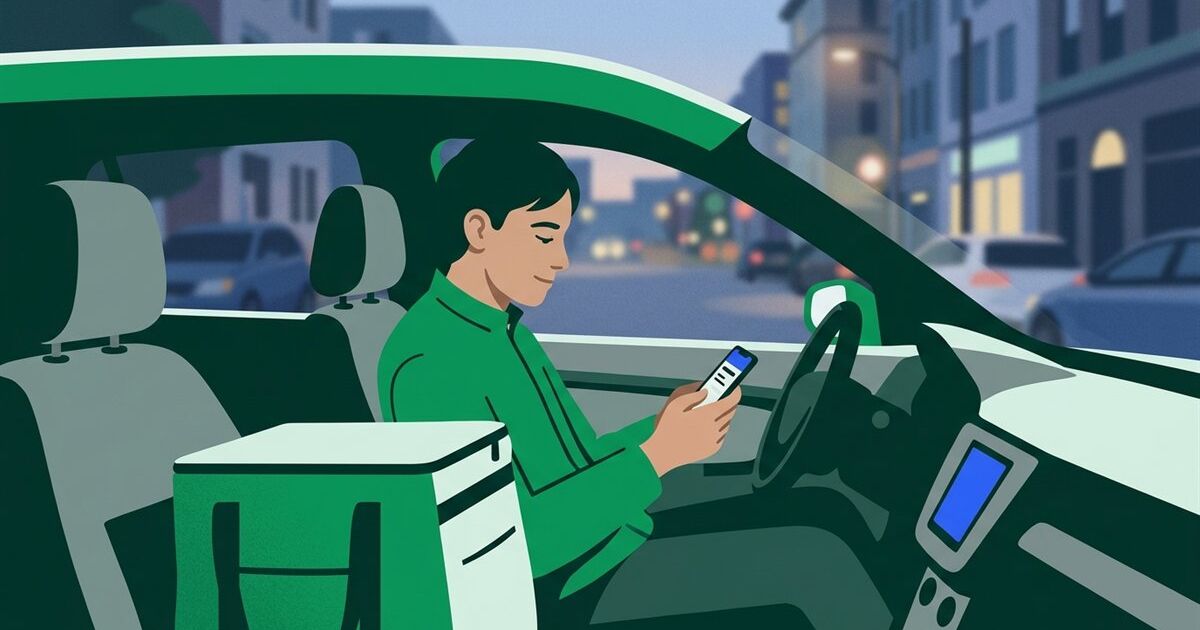
You linked the checking account, handed over read access to two months of deposits, and the screen came back with a number that wouldn't fill the tank. No reason given. No note explaining what to fix. Just a smaller figure than the ad promised and a button that says get it now.
If you drive, deliver, shop or freelance, that's the normal outcome, not bad luck. Almost every cash advance app for gig workers was underwritten around something you don't have: one employer, one payroll file, and one deposit that lands on the same day every other week. Take that away and the model starts guessing. One clarification before anything else, since the two get mixed up constantly: this piece covers third-party advance apps, not the platforms' own instant cashout features, which are a different product with their own per-transfer fees.
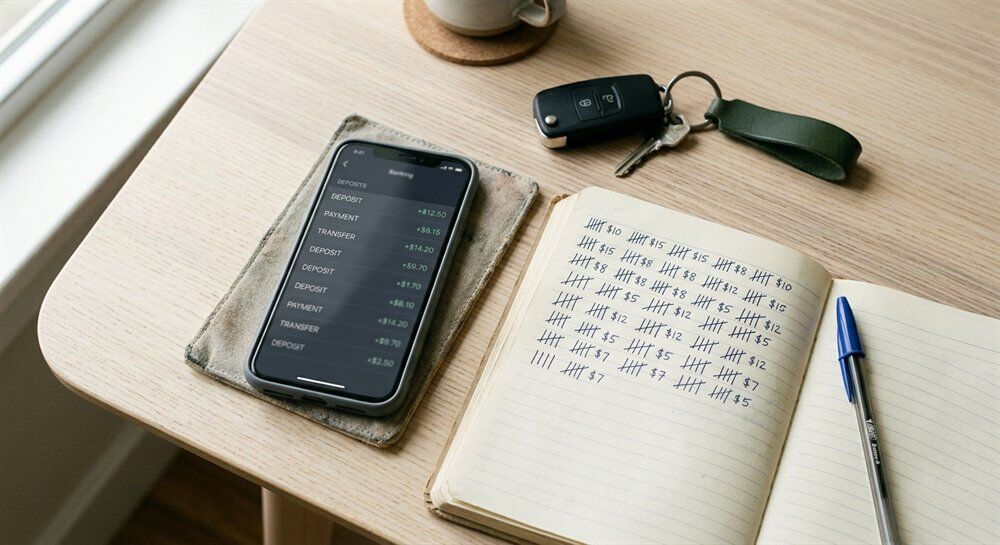
Begin with what the app can see. It has no view of your Uber dashboard, your DoorDash earnings tab, or the forty minutes you spent idling outside a grocery store waiting on a batch. It has your bank feed, and it works backwards from there.
The Consumer Financial Protection Bureau, the federal agency that supervises consumer financial products, spelled out the mechanism in its Data Spotlight on the paycheck advance market, published July 18, 2024:
Because direct-to-consumer firms do not typically have access to employers' time and attendance records, they use alternate methods to estimate the amount of a consumers' earned but unpaid wages... they typically require proof of or access to recent pay stubs or regular bank deposits and bank account transactions, and some direct-to-consumer firms utilize geolocation services to estimate hours worked.
Estimate is the word doing the work in that sentence. The model hunts for a repeating shape in your account: same sender, similar amount, predictable date. Someone paid by a warehouse every other Friday hands it that shape instantly. A week made of several uneven payouts from several senders on several different days is a much harder guess, even when your total is larger than the warehouse worker's.
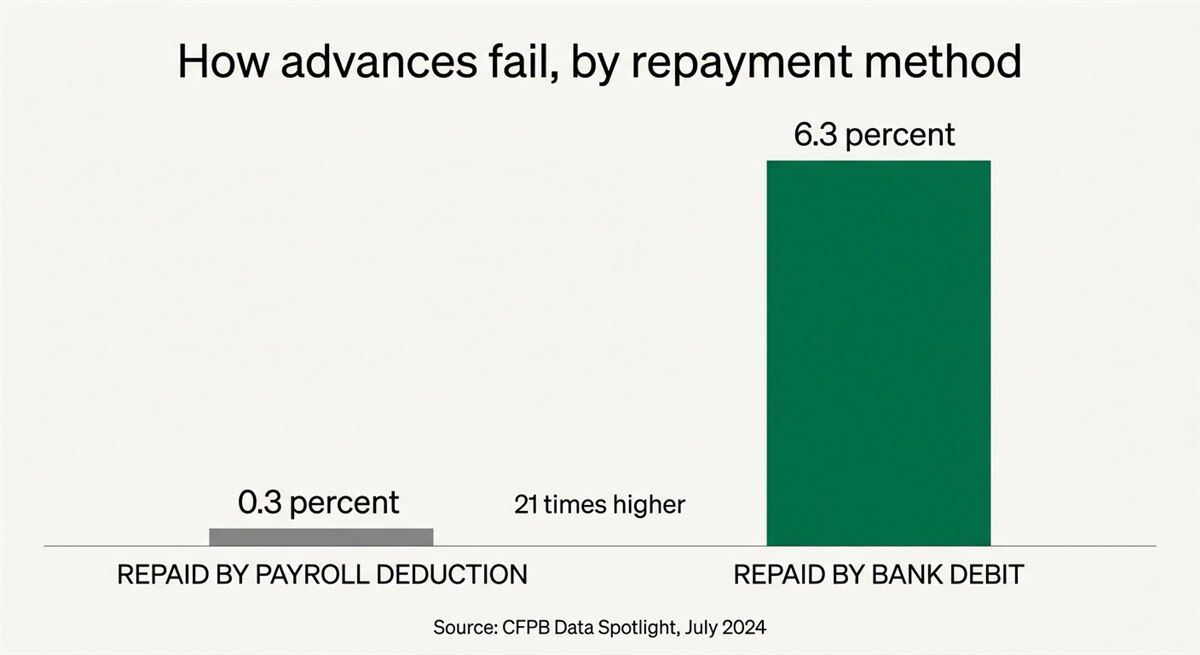
Then there is the collections reason, which nobody puts in the marketing. In that same CFPB report, advances repaid through an employer's payroll system were charged off at 0.3 percent in 2022, while direct-to-consumer advances repaid by debiting a bank account were charged off at 6.3 percent, 21 times higher. When repayment gets pulled out of payroll before the worker ever touches it, almost nothing goes bad. Make a company reach into a checking account and hope, and plenty does. Gig workers only qualify for the second kind, so the caution you're running into is aimed at the collection channel, not at you personally.
Eligibility pages get rewritten often. Everything below was read on August 12, 2026, and it's each company's own published wording rather than a review or a ranking. Check the live page before you apply.
Chime's MyPay eligibility page lists gig economy payments as qualifying deposits and names Uber, Lyft and DoorDash. The published bar is two qualifying direct deposits of $200 or more each within the last 36 days, or one such deposit plus an additional data source, or one deposit from a recognized government benefits payer. You also need to be 18 or older, in an eligible state, with a Chime Checking account in good standing and a physical debit card activated. Two deposits of $200 inside 36 days works out to $400 across roughly five weeks, which is the lowest published bar of any app here. Chime recalculates the limit at each qualifying deposit.
Read this one twice, because 2026 roundups aimed at gig workers still recommend Klover. Klover's own Types of Acceptable Income page lists "Self-employment income (including gig apps like Uber, DoorDash, etc.)" under income types it does not accept, alongside unemployment benefits, monthly income, and deposits that do not come from a verified payroll provider. What the company wants is a paycheck of $250 or more arriving on a 7 or 14 day schedule through an employer's payroll system, and it says transfers, PayPal, ATM deposits, mobile deposits and paper checks do not qualify. Converted to a monthly figure, $250 every 14 days is about $542 a month ($250 x 26 / 12) and $250 every 7 days is about $1,083 a month. Neither number helps if the deposit isn't payroll.
EarnIn's flagship Cash Out requires an employer-provided email address or a fixed work location, plus a consistent direct deposit pay schedule. Someone running delivery routes has neither, which is why the rejection tends to come fast. EarnIn also offers Cash Out Link, a separate overdraft account provided by Lead Bank, which the company says can work with different types of income and not just employment wages. That one carries a $1.99 service fee per approved request.
Varo Advance defines a qualifying direct deposit as an electronic deposit of your paycheck, pension or government benefits from your employer or government agency. Gig platforms are not named as accepted and not named as excluded, though peer-to-peer payments such as Venmo are ruled out explicitly. The threshold is $800 or more in qualifying deposits a month, or an external account linked with ongoing direct deposits and several months of positive balances. Varo also publishes something its competitors mostly hide: initial limits range from $20 to $250, fees run from $1.60 to $100 depending on the amount, and approval is subject to evaluation of consumer reports.
Dave's ExtraCash eligibility page gives no dollar figure and no deposit count. It says approval depends on many factors, including your prior history with the company and the activity in your connected account, then names settling previous transfers on time and in full, keeping a positive balance, and having recurring deposits as things that help. Your amount updates daily, higher amounts cannot be requested, and any outstanding balance blocks a new advance entirely.
Running Instacart in the mornings and rideshare at night is how a lot of people cover a car payment. Financially it's sensible. To an underwriting model built on pattern recognition, though, it looks like four unstable income sources instead of one stable one, and the app is scoring the pattern, not the sense behind it.
Four things move that read:
The volatility is real and measured, not imagined by the apps. In the Federal Reserve's report on the economic well-being of US households in 2024, published May 2025, 41 percent of adults who did gig activities said their income varied at least occasionally month to month, against 26 percent of adults who did no gig work, a gap of 15 percentage points. What the survey records as a fact of the job, the model records as risk.
Advertised maximums are ceilings, and why the advertised maximum rarely matches your first advance is documented rather than rumored. Varo states it plainly: initial limits range from $20 to $250, against a product marketed on the higher figure. The other four apps here publish nothing comparable, so Varo's range is the most useful public benchmark a first-time applicant has.
Federal enforcement has repeatedly landed on the same gap. In November 2024 the Federal Trade Commission took action against Dave, Inc. over advertising dominated by "up to $500" claims, alleging the company offered advances of $500 only a tiny percentage of the time. One consumer quoted in the FTC's complaint put it this way: "[c]laims you can borrow up to 500.00 dollars. But, I only was able to get 25.00. Not very helpful." That case, civil action 2:24-cv-09566 in the Central District of California, remains pending, and the allegations have not been decided by a court.
Two other matters did resolve. The FTC announced $18 million in refunds for Brigit customers in November 2023 over allegations that promised advances of up to $250 were rarely available and a $9.99 monthly membership was hard to cancel. Cleo AI settled for $17 million in an action announced March 27, 2025, over allegations it advertised up to $250 in advances while disclosing the real available amount only after a subscription had been set up. Neither company admitted wrongdoing.
Getting approved is the part people worry about. Repayment is the part that costs money, and how the payday auto-debit works decides how much. The CFPB describes the mechanism bluntly: "Repayment is typically made by directly debiting the consumer's bank account, which could result in consumers paying overdraft or NSF fees if their accounts do not contain sufficient funds on the repayment date."
Picture a Thursday debit set when you had three delivery shifts booked. Rain kills Tuesday, a batch gets canceled Wednesday, and the app pulls anyway. Now you're paying an overdraft fee that dwarfs the advance fee, and a consumer narrative filed with the CFPB describes one app retrying a failed debit several times in a single day, which is how one shortfall turns into several fees.
The volume data explains why small fees add up. The CFPB found the average advance was $106, the average worker took 27 to 30 advances a year and accessed roughly $3,000 annually, and paid $68.88 a year in fees, with about 90 percent of workers paying at least one fee. The agency's own illustration: a $106 advance carrying $3.18 in fees repaid over 10 days equals an APR of 109.5 percent. Three dollars feels like nothing. Thirty times a year, on money you already earned, it's not nothing.
Three habits keep this manageable. Know the exact debit date before you accept, in writing, not from memory. Keep a buffer in the account through that date rather than treating a zero balance as break-even. And don't stack advances across two or three apps with overlapping debit dates, because one bad week then triggers several failed pulls at once.
Federal policy on earned wage access moved in December 2025, and it moved away from your situation. The CFPB's advisory opinion Truth in Lending (Regulation Z); Non-application to Earned Wage Access Products, published at 90 FR 60069 on December 23, 2025, concludes that a "Covered EWA" product is not credit under the Truth in Lending Act. To count as Covered EWA, all four of these must hold:
Hold that against gig work and the reading is uncomfortable. You have no payroll event and no payroll data, so criteria one and two are unreachable. The apps you can actually get repay by debiting your bank account, estimate earnings from bank data instead of payroll records, and in Varo's published case evaluate consumer reports. That's my reading of the criteria against how these products work, not a finding by the CFPB about any specific app, and the criteria are listed above so you can check the logic yourself.
Worth knowing too: the same advisory opinion withdrew earlier guidance from 2020, January 2025 and 2024. Federal treatment of this product reversed twice in under two years. Whatever protection you're counting on, don't assume it's the federal rulebook.
Yes, at apps whose published rules accept platform payments. Chime's MyPay eligibility page names DoorDash, Uber and Lyft as qualifying payers and asks for two qualifying deposits of $200 or more within 36 days. Klover's own page excludes gig app income by name, so DoorDash deposits won't qualify there.
Because the first limit reflects what the model can predict, not what you earn. Varo publishes initial limits of $20 to $250 against a higher marketed maximum. The FTC has settled cases with Brigit and Cleo over the gap between advertised and available advances, and has a pending case against Dave making similar allegations.
It varies by company and you should assume nothing. Varo states that Varo Advance approval is subject to evaluation of consumer reports. Dave lists prior history with the company and connected-account activity instead of naming credit checks. Read the eligibility page for the specific app, since the practice differs and changes.
Your bank may charge an overdraft or NSF fee, which the CFPB names as a direct risk of repayment by bank debit. One consumer narrative filed with the CFPB describes an app retrying a failed debit multiple times in one day. Dave blocks a new advance entirely while a balance is outstanding.

Cash App Borrow lets you take $20 to about $500 for a flat fee with a real APR equivalent. See how to unlock it and how it compares to an EWA advance
Read article
Most cash advance apps only deposit to your bank. See which ones issue a debit card you can use at an ATM, and what it costs.
Read article
Cash advance apps without a bank account are rare. See which ones actually work with a prepaid card or Chime, Varo, or Cash App instead of a bank.
Read articleSee how the top earned wage access apps stack up on fees, limits, and speed. View the full ranking