October 1, 2026
Cash App Borrow: Real Limits, Fees & APR (2026)
Cash App Borrow lets you take $20 to about $500 for a flat fee with a real APR equivalent. See how to unlock it and how it compares to an EWA advance
Read article

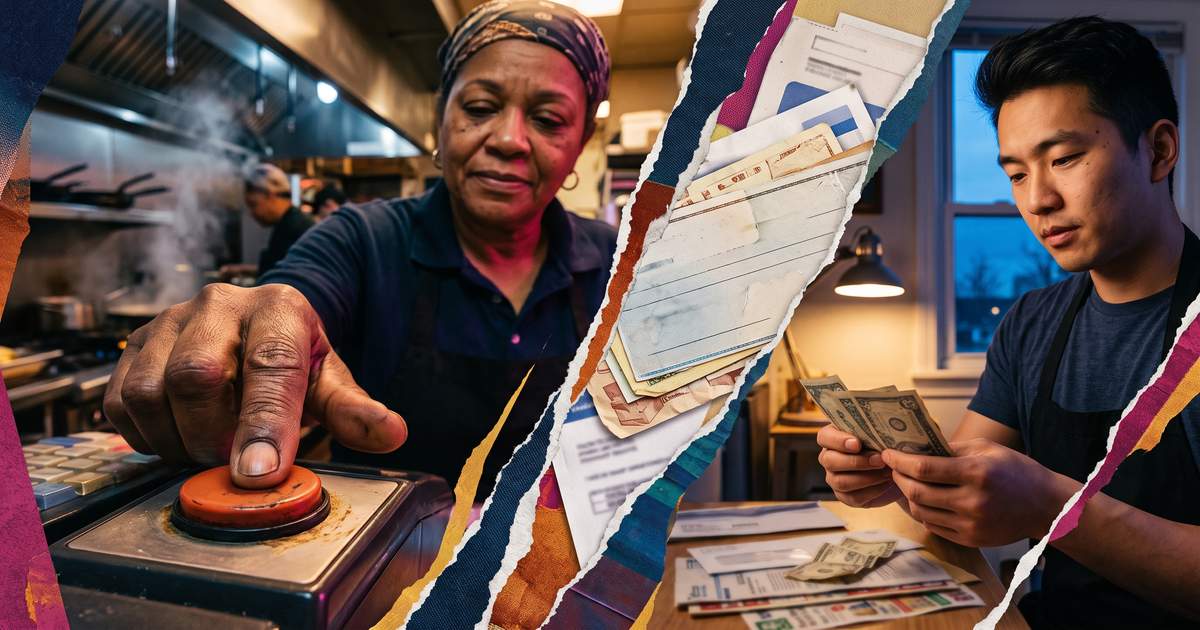
The first time Priya used same-day pay, it felt like a switch flipped. She finished a shift at the restaurant, tapped the button, and money she'd earned that afternoon was in her account by dinner. No waiting for Friday. She started doing it most days, a little here, a little there, and for a few weeks it felt like she'd gotten a raise. Then her regular paycheck landed and it was tiny, almost nothing, because she'd already pulled most of it out one transfer at a time. The money hadn't multiplied. It had just arrived early and gotten spent.
That's the whole story of same-day pay, and it's why this article exists. On-demand pay genuinely helps with one thing and quietly hurts with another, and the difference comes down to how you use it. This applies to both employer-provided on-demand pay and consumer sign-up apps, since the budgeting effect is the same either way; where the cost structure differs, I'll say so. If you just got access to same-day pay, or you're deciding whether to make it a habit, read this before it becomes automatic.
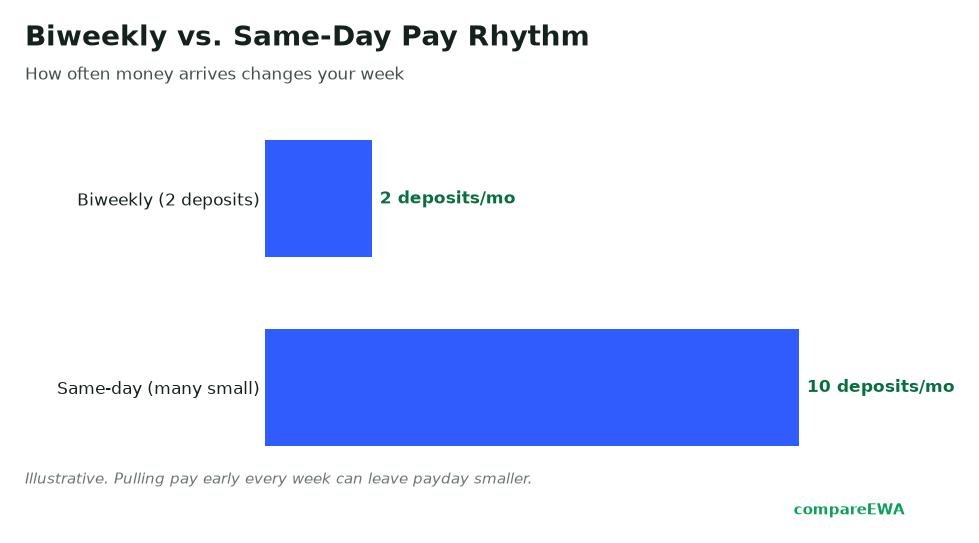
Let's be blunt about the core fact, because everything else follows from it. Same-day pay is a timing change, not new money. Every dollar you pull early is subtracted from your next scheduled deposit. Your total pay is identical. Only the timing changes, and sometimes a fee gets added on top.
The reason it feels like more is psychological. Money showing up today, right when you want it, reads as a win in a way that the same money on Friday doesn't. But nothing about your earnings changed. You worked the same hours for the same rate. You just moved the finish line closer, and moved your payday deposit down by the exact amount you pulled.
Hold onto that, because the entire risk with same-day pay is forgetting it. Treat an early pull as free upside and you'll spend it like a bonus. Treat it as a slice of Friday's check arriving Wednesday and you'll spend it a lot more carefully.
Here's something most people never think about: your bills are wired to a pay rhythm you didn't consciously choose. Biweekly is the single most common private-sector schedule. BLS data shows about 43 percent of private establishments pay every two weeks, and another 27 percent pay weekly. If you're a typical worker, you've built rent, autopays, and due dates around that predictable one- or two-week cadence, even if you never mapped it out on paper.
Same-day pay breaks that cadence on purpose. Instead of one anchor deposit you plan around, your income becomes a stream of small transfers with no natural rhythm. For some people that's fine. For a lot of people it removes the very structure their budget was quietly leaning on, and that's when things drift. When there's no "big check day," there's no obvious moment to fund the big obligations, and rent stops having a deposit it's clearly tied to.
I don't want to make this sound like a warning label with no upside, because there's a real, legitimate benefit when you use it for a specific gap.
Say a bill lands on Wednesday and payday is Friday. Without same-day pay, you might overdraft your account and eat a $35 fee, or pay a late charge on the bill, or both. With same-day pay, you pull the amount you're short and cover it for a small transfer fee or, on many employer programs, for free if you can wait a day for the transfer. Swapping a $35 overdraft for a small-or-zero cost is a genuine win. That's the tool working as intended: closing a real timing gap you couldn't otherwise bridge.
The key word is specific. Same-day pay earns its keep when it replaces a more expensive problem for a defined shortfall. It stops helping the moment it becomes a daily reflex.
Let's put numbers on what daily pulling does. Say Priya nets about $1,000 per biweekly paycheck.
Before same-day pay, payday means $1,000 lands in one lump. That lump is big enough to cover rent, throw something at a credit card, and still leave a cushion. She anchors her rent to it without thinking, because the money's obviously there.
After four early pulls over the two weeks, say $150 each, she's taken $600 out ahead of payday. When Friday comes, the deposit is $400, not $1,000, and if there were express fees on those pulls, it's a little less than that. Rent was supposed to come out of this check. Now the "big" deposit she used to anchor rent to is mostly gone, spent in pieces on days when $150 felt small. The total she earned is unchanged. But the structure that made rent feel automatic collapsed, because the anchor deposit turned into a trickle.
That's the shrinking-paycheck effect, and it's the single most important thing to understand about same-day pay. Pull early every cycle and payday stops being an event. It becomes an afterthought, already spent before it arrives.
The pattern here is well documented: once workers start pulling early, repeat use tends to become the norm rather than the exception. And frequent use isn't automatically bad, but it's where the costs and the risks concentrate.
Two things stack up. First, fees. If you're on a consumer app or paying for instant delivery, a small express fee on every small pull adds up fast across a month of daily transfers. You can end up nickel-and-diming yourself into real money for the sake of speed you didn't strictly need. Second, the behavioral trap. Consumer-advocacy research, including work from the Center for Responsible Lending, has documented that heavy users of early-access products can see checking-account overdrafts rise rather than fall, in one study by about 56 percent, the opposite of the intended benefit. Once payday is always pre-spent, you're perpetually reaching for the next early pull just to stay level.
Regulators have flagged the mechanic plainly, too. The CFPB has emphasized that pulling wages early leaves a smaller deposit on payday and that costs need to be transparent to workers. Note that the CFPB's 2024 proposed interpretive rule was later superseded by a December 2025 advisory opinion, so I'm citing it only for the factual point that early access shrinks your payday deposit, not as a current binding rule. The point stands regardless of the regulatory back-and-forth: take money early, and payday is smaller by exactly that much.
You don't have to swear off same-day pay. You have to keep it a tool instead of a habit. Three rules do most of the work.
Above all, reframe the goal. The aim isn't to get better at pulling pay every day. It's to need same-day pay less over time, which means pairing it with even a small buffer so a Wednesday bill doesn't require Friday's money. A thin cushion is why the shrinking paycheck bites in the first place; the St. Louis Fed's work on emergency funds makes the same point about why households get caught by ordinary surprises. Build a little reserve, and same-day pay goes back to being an occasional bridge instead of the thing your whole week runs on.
No. Same-day pay is a timing change, not new money. Every early dollar is subtracted from your next scheduled deposit, so your total pay is unchanged and sometimes a small fee makes it slightly less.
Because everything you pulled early comes out of that same paycheck. If you take several early pulls across a pay period, your payday deposit shrinks by the total you already pulled, so the "big" check you used to anchor bills to can end up small.
It's risky as a weekly habit. Repeat use is common once people start, and it can stack up express fees and leave payday perpetually pre-spent. Some heavy users of early-access products even see overdrafts rise. Use it for specific gaps, not as a routine.
A small express fee on each pull looks harmless, but daily pulls multiply it fast. Add up every transfer fee across a month; if the total surprises you, switch to the free slower transfer on an employer program or pull less often. Employer programs usually offer a no-fee slower option, while consumer apps more often charge per instant transfer.
Cap early pulls to true timing gaps, keep one anchor bill like rent funded from your full paycheck, and watch the fees. Pair it with even a small buffer so you reach for it less over time.
From your full paycheck. Keeping your biggest obligation tied to the whole deposit means payday always has a clear job and can't fully vanish into small early pulls. Fund the anchor bill from the lump, and use early access only for smaller, specific gaps.

Cash App Borrow lets you take $20 to about $500 for a flat fee with a real APR equivalent. See how to unlock it and how it compares to an EWA advance
Read article
Most cash advance apps only deposit to your bank. See which ones issue a debit card you can use at an ATM, and what it costs.
Read article
Cash advance apps without a bank account are rare. See which ones actually work with a prepaid card or Chime, Varo, or Cash App instead of a bank.
Read articleSee how the top earned wage access apps stack up on fees, limits, and speed. View the full ranking